
By Ronald Ng’eno (VillageReach), Charity Mureithi (InSupply Health) and Florence Wairimu (InSupply Health)
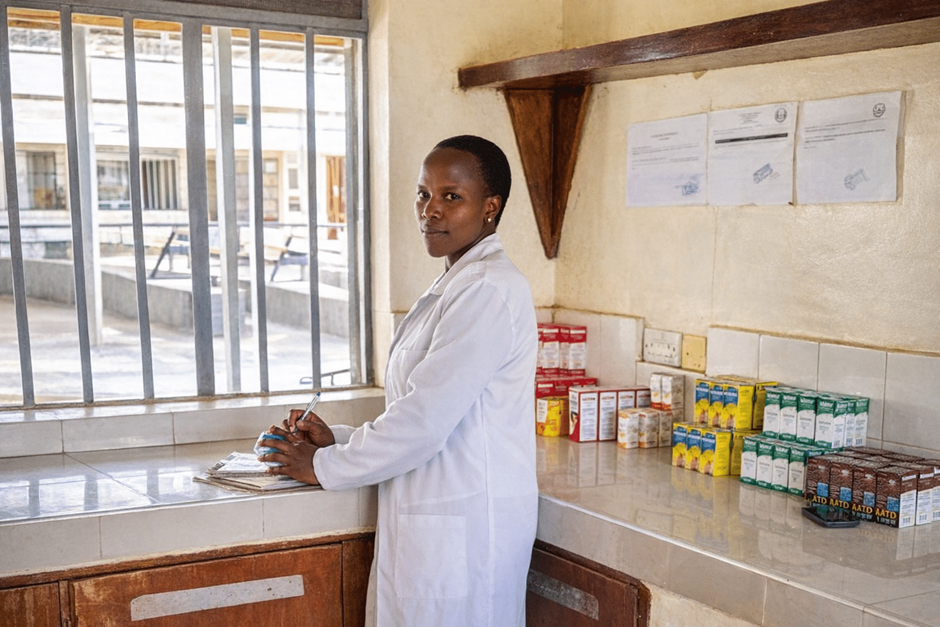
One ordinary morning, a mother walked into Lokori Sub-County Hospital in Turkana County, Kenya, desperate for an IUCD. The team thought they were completely out. Joyce Chebet, being Joyce, went back to the store one last time and, hidden behind some boxes, found a single kit. She prepped it carefully and handed it over. The woman’s face lit up. “God bless you,” she kept repeating, tears in her eyes.
Joyce smiled, but she also felt the risk. What about the next mother? Or the child who shows up when the paracetamol is gone, and the roads are flooded? In Turkana, supplies don’t just “run low”; they can disappear for weeks. Distances are large, transport during the rains is anything but reliable, and every hour counts.
Such moments are why Joyce now spends her days making sure the shelves never stay empty. While she never set out to be the one who keeps a hospital from running out of supplies, at Lokori Sub-County Hospital, that’s exactly what she’s become.
Why getting the numbers right actually saves lives
Everything starts with knowing what people really need and planning for it before a crisis hits. Joyce puts it: “We count what we have, we look at what’s being used, and we stop guessing.” This is known as quantification, a technical term that refers to estimating the quantities and costs of products required for a specific health program or service.
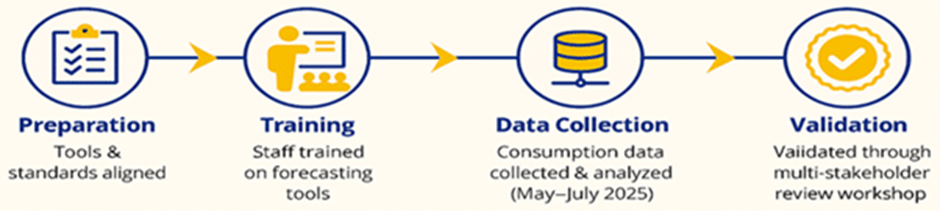
Mark Osiemo, supply chain manager at inSupply Health, notes: “The work was labour-intensive and highly prone to errors, with broken formulas and long turnaround times that could force teams to restart large parts of the process.”
Then everything got simpler
VillageReach and InSupply Health teamed up with county governments and the Ministry of Health’s Directorate of Health Products and Technologies (DHPT). Together, they built the Strategic Resource Management Tool (SMArT), which ensures resources are used efficiently.
No more guessing based on “whatever flew off the shelf last month.” Now teams sit down, count stock, check consumption, spot what’s not moving, and move near-expiry items to where they’ll actually get used. The tool does the heavy math in seconds, so people can focus on decisions rather than wrestling with Excel.
Dr Jamlick Karumbi from DHPT sums it up best: the point isn’t fancy software; it’s giving Kenyan teams better information so they can make better calls.
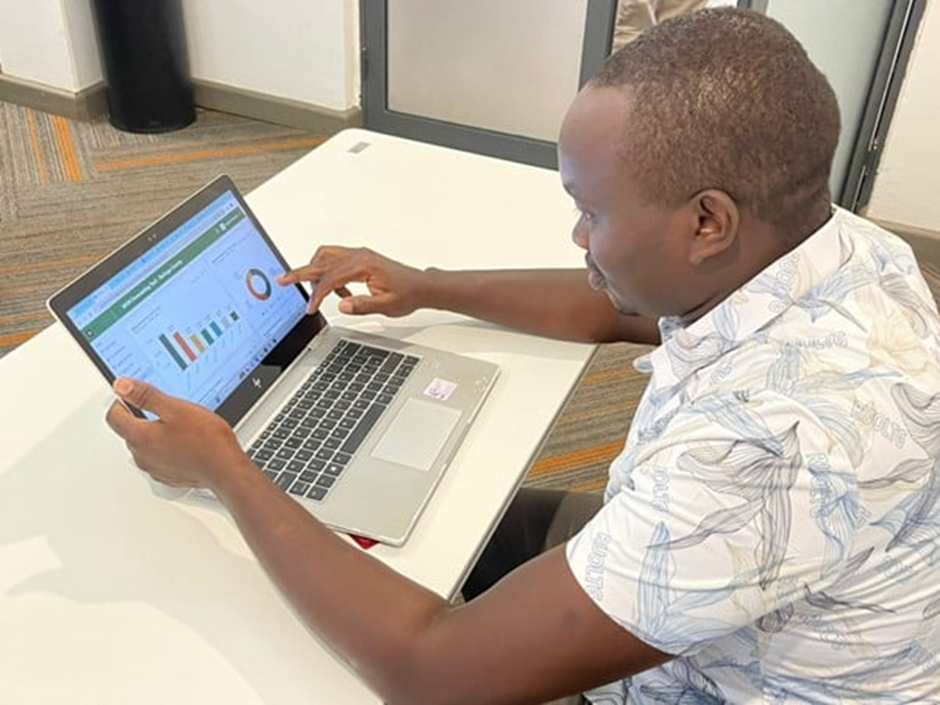
Baringo County pharmacist, Clement Kiprop, engages with the tool during a capacity-building workshop. Photo courtesy: InSupply Health.
What this looks like on the ground in Turkana
Joyce and her colleagues are constantly on WhatsApp with sub-county teams. “Shortage at Lokori, anyone have extra amoxicillin?” One facility’s overstock becomes another’s lifeline. When roads become impassable during the rains, partners step in with transport. They keep about two months of buffer stock.
This buffer leads to peace of mind. It’s the reason a sick child doesn’t have to wait for the next delivery truck that might never come. Joyce notes, “When supplies run out, it’s the children who suffer most. Adults can sometimes hang on. Kids arrive when things are already bad.”
From pilot to nationwide shift
The same approach that started in Trans Nzoia is now rolling out across counties and even feeding into national planning. For the first time, Turkana County can see exactly what Community Health Promoters need in the villages; they no longer need to guess. And the cost? Approximately USD 212 per community health worker per year to keep essential commodities available at the community level.
In a setting like Turkana, that small investment can mean the difference between a child being treated early at home or arriving at a health facility already in critical condition.
When the system works, you feel it when a mother leaves the clinic with what she needs instead of walking away disappointed. When a child gets treated before the fever spikes dangerously high. When a community health promoter rides back to the village with a full kit instead of empty hands.
And Joyce Chebet goes home knowing she didn’t just fill a shelf, she helped build a health system that puts people first. That’s the real story. Not the spreadsheet. Not the tool. But counties and a nation are learning to plan better for the families they serve.
For more information about strengthening Kenya community-level supply chains and supervision, contact George Nzioka: [email protected], or for our global work on supply chains for community health workers, contact Rebecca Alban: [email protected]